Aditya Kumar / systems & C++ / DTU ’28

Open to SWE & quant-dev internships · 2027

I build fast, correct systems in C++

Third-year IT undergrad at Delhi Technological University. I write low-latency C++, ship full-stack apps, and solve contest problems for fun.

./lob_benchmark

warmup
100,000 orders
mixed ops
500,000
price levels
5,000 / side
runs
11 · median
throughput
6.1M ops/s
mean per op
163 ns/op
p99 per op
≤ 542 ns
Order book engine benchmark, median of 11 runs on a MacBook Air (M3), single thread; p99 is an upper bound.
Scroll

About

I started out making games in Class 10, stayed for the algorithms, and now spend my time shaving nanoseconds off an order book.

C++ has been my main language since well before college — two-plus years before my B.Tech started — and competitive programming taught me to care about two things at once: speed and correctness.

These days I’m taking my limit order book engine past a finished matching core to a full test suite and Nasdaq ITCH replay, and aiming at trading-systems engineering — where a few hundred nanoseconds actually matter.

Hardware counts too: second prize at a micromouse competition, after a sensor broke on competition day and I had to adapt on the spot.

Education & credentials

  • 2024 — 2028

    B.Tech, Information Technology

    Delhi Technological University · CGPA 8.65

  • JEE

    Main — 99.6 percentile

    Advanced — top 9%

  • Certifications

    Machine Learning & Deep Learning Specializations

    Andrew Ng · Coursera

  • Certifications

    Discrete Mathematics for Computer Science

    UC San Diego

  • 2+ yrsof C++ before college
  • 8.65CGPA at DTU
  • 99.6JEE Main percentile
  • 2ndMicromouse competition

Things I’ve built.

Sorted by how many nanoseconds they care about. The last one is where it all started.

C++20 · systemsMatching core complete

Limit Order Book Engine

A C++20 limit order book and matching engine with strict price-time priority, fixed-point prices and data structures chosen for predictable, cache-friendly latency.

ops / sec
6.1M
mean per op
163 ns
p99 per op
≤ 542 ns

Median of 11 runs: 500K mixed ops on a 100K-order book over 5,000 levels per side, single thread on an Apple M3. p99 includes timer overhead, so it is an upper bound.

  • Strict price-time priority: crossing limits sweep the book and rest the remainder, market orders fill IOC, and modifies follow exchange rules (size cuts keep queue position, reprices re-queue)
  • Each PriceLevel is both an AVL tree node and the head of an intrusive FIFO order queue, so a hash-mapped cancel is a pointer splice: O(1) average, O(log L) only when a level empties
  • 64-byte Order and PriceLevel records, pinned by static_assert, come from fixed-capacity memory pools and are never individually heap-allocated
  • Fail-safe API: [[nodiscard]] status codes reject duplicate IDs, unknown IDs and zero quantities before any state changes; fills append to a caller-owned buffer; runs clean under ASan/UBSan
  • C++20
  • CMake
  • Intrusive AVL
  • Memory pools
  • ASan/UBSan
Illustrative book · bids blue, asks amber

Flutter · SupabaseShipped v1.0.0

Connecta

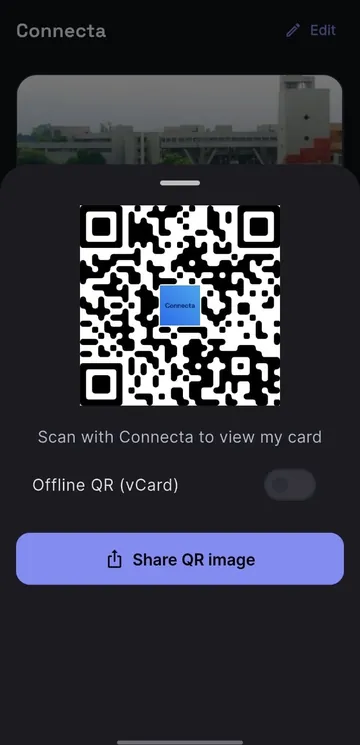
Digital business cards for people who still hand out paper ones. Show your QR, scan theirs, and you’re connected.

  • Built end to end: the Flutter app (Material 3, Riverpod 2) and the backend behind it
  • Migrated Firebase → Supabase: Postgres with row-level security, SECURITY DEFINER RPCs for the contact exchange, a Deno Edge Function for account deletion
  • Google sign-in via Supabase Auth, driven by a five-state reactive auth gate
  • Released as an Android APK on GitHub; hardened with 7–8 early testers
  • Flutter
  • Dart
  • Supabase
  • PostgreSQL
  • Riverpod
Connecta’s share screen: a QR code with the Connecta logo, the caption “Scan with Connecta to view my card”, an Offline QR (vCard) toggle and a Share QR image button.
Connecta v1.0.0 on Android

Where it all started

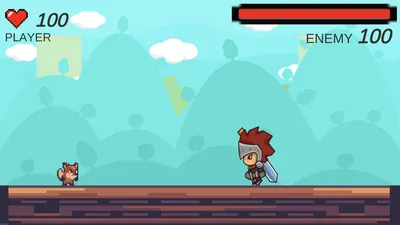
Bringing a Gun to a Sword Fight

Unity · C# · built 2021, remastered 2026

The first game I ever built: a boss fight I made in Class 10 while learning Unity from Brackeys tutorials. Remastered in Unity 6 in 2026 so it runs in the browser. The gameplay might be broken; the fun isn’t.

Desktop browser + keyboard

Ratings over adjectives.

Competitive programming since school — it’s where I learned to think in constraints and edge cases.

LeetCode

1,862

Knight · top 6.06%

Max 1,862 · global rank 52,792 · 19 rated contests · 468 solved

leetcode.com/u/kraditya23

Codeforces

1,296

Pupil

Max 1,387 · 17 rated contests · 115 solved

codeforces.com/profile/kraditya23

CodeChef

1,676

3★

Max 1,713 · global rank 8,772 · 5 rated contests · 62 solved

codechef.com/users/kraditya23
19 rated contests · updated 7 Nov 2026 from leetcode.com
17 rated contests · updated 30 Oct 2026 from codeforces.com
5 rated contests · updated 5 Nov 2026 from codechef.com
  • 600+problems solved across LeetCode, Codeforces and CodeChef
  • All-KillLeetCode Biweekly 185 · rank ~1,747 of 39K+

The toolbox.

Languages

What I think in

  • C++20/23
  • Python
  • Dart
  • SQL
  • C#

Algorithms & systems

Where the nanoseconds go

  • Algorithms & DS
  • Memory pools
  • Intrusive containers
  • Benchmarking

Apps & backend

Shipping real products

  • Flutter
  • Riverpod
  • Supabase
  • PostgreSQL + RLS
  • Firebase
  • Google OAuth

Tools & foundations

Everything around the code

  • Git
  • Linux / macOS
  • VS Code
  • Unity
  • ML / DL
  • Discrete math

Up nextGoogleTestGoogle BenchmarkNasdaq ITCH 5.0

Let’s build something fast.

Hiring for SWE or quant-dev internships, want to talk low-latency C++, or have a contest problem that’s been bugging you? My inbox is open.

Get in touch

The quickest way to reach me is email.